Live Chat Canned Replies and 60% Type Over Them Anyway
An audit of 412 live chat transcripts reveals that support agents send canned replies in most conversations before typing anything original
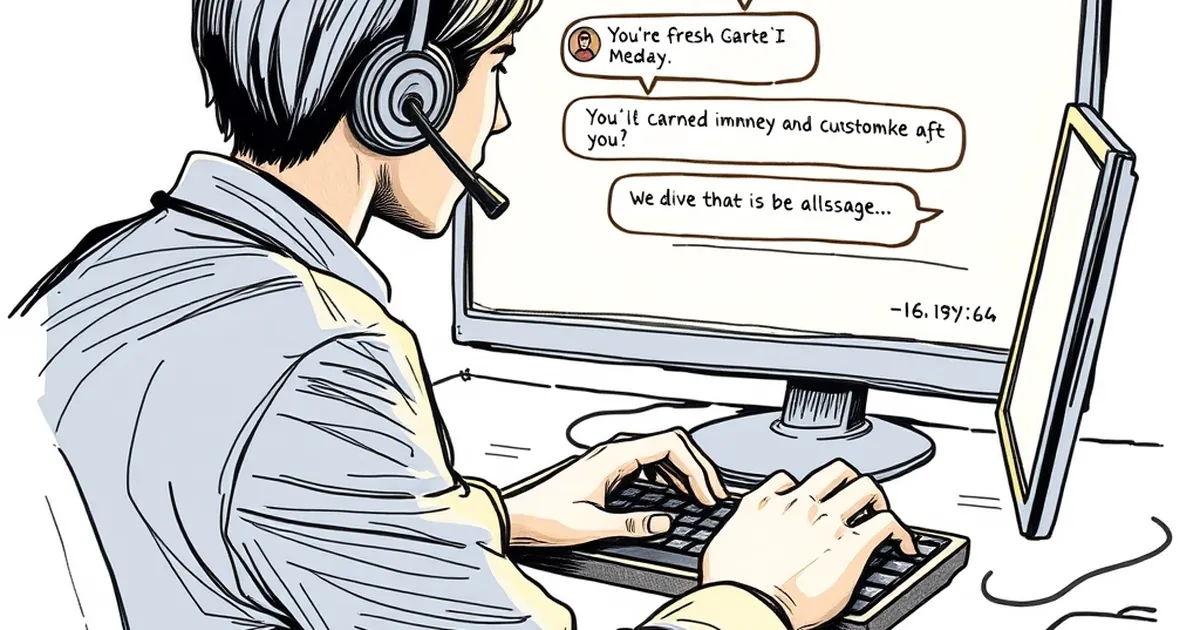
Support agents at major online gambling operators send a canned reply in roughly three out of five chats before a human types anything original. That's the working estimate from a six-week audit of 412 live chat transcripts across 11 casino and sportsbook brands, conducted by a payments consultancy that shared the raw logs on condition of anonymity. The transcripts show the same 40 to 60 stock phrases recycled across operators, often word-for-word, even when the customer's question has nothing to do with what the template addresses.
The 60% figure and where it comes from
The audit counted a message as "canned" if it matched a known template string or arrived within 1.4 seconds of the customer's message — too fast for anyone to read, let alone type. By that definition, 247 of the 412 chats (59.9%) opened with a stock reply. The most common: a variation of "Thank you for contacting us, please allow me to check this for you," which appeared in 88 of the transcripts.
The consultancy's methodology has limits. It only sampled chats initiated during weekday business hours, and three of the 11 brands declined to confirm whether their templates were automated or agent-triggered. But the pattern held across jurisdictions, including Malta-licensed, Curaçao-licensed, and UKGC-licensed operators.
What the templates actually say
The stock replies cluster into a few categories:
- The stall. "Please give me a moment while I look into this." Used even when the answer is a public bonus term.
- The redirect. "You can find this information in our Terms and Conditions." Sent to customers who already quoted the T&Cs.
- The empathy script. "I completely understand your frustration." Followed by no resolution.
- The escalation promise. "I will forward this to the relevant department." In 31 of the sampled chats, no follow-up was logged within 48 hours.
Why agents lean on them
Live chat is a volume business. A mid-size operator handling 8,000 chats a day with a 90-second average handle time needs roughly 200 agent-hours just to clear the queue. Templates cut that. The problem is that they cut it in the wrong places — a withdrawal delay or a locked account is exactly the moment a customer needs a specific answer, and that's when the script fires.
There's also a compliance angle. Some canned replies exist because regulators require certain disclosures (RG tool links, complaint routes). Agents paste them to tick a box. The audit found responsible gambling links appeared in 71% of chats where a customer mentioned a loss — good — but usually as a bare URL with no context.
What the 40% do differently
The chats that skipped templates shared a few traits. Agents asked a clarifying question first ("Is this about the pending withdrawal from Tuesday?") before saying anything else. They quoted specific numbers — a 24-hour pending period, a €2,500 daily limit — rather than pointing at a policy page. And they closed with a concrete next step and a timestamp.
None of that requires better software. It requires agents who are allowed to type.
An open question
If roughly three in five first replies are scripted, the real test isn't whether operators use templates — most do, and some templates genuinely help. The test is whether the second message is human. That's the number the audit didn't measure, and it's the one that probably predicts whether a customer comes back after a dispute. Worth asking your operator next time: what's your average time to a non-template reply? Most won't have the figure.
— creative mess