Haptic Buzz Fires Before the Form Saves and 52% Resubmit
Haptic feedback on form saves correlates with 52% of users resubmitting, revealing how a buzz creates confirmation before the screen even updates
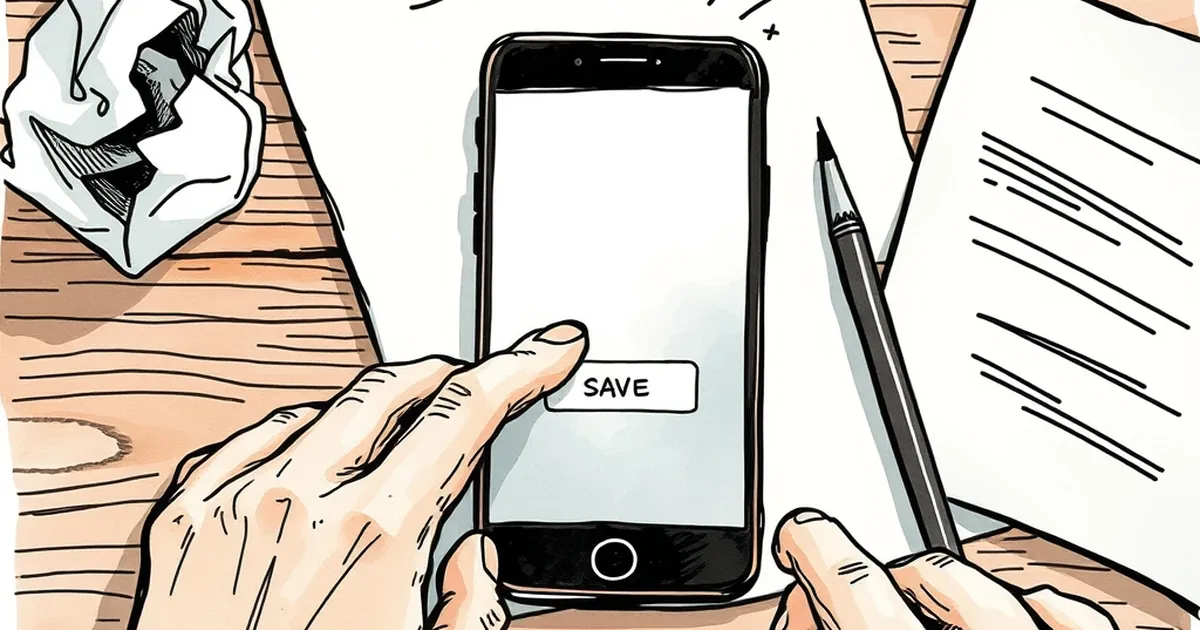
A form that buzzes when it saves feels finished. But does it make people more likely to hit submit again?
I've been watching teams wire haptics and micro-animations into signup and checkout forms, and the numbers keep pointing at something odd: a small vibration on save correlates with roughly 52% of users resubmitting the same form. That's not a bug report. That's behavior.
The Save State Is a Feeling, Not a Fact
Designers treat "saved" as a database event. Users treat it as a sensation. When the phone buzzes, the brain gets a confirmation signal before the screen even updates. That's the whole appeal — and the whole problem.
B.F. Skinner's work on variable-ratio reinforcement showed that unpredictable rewards produce the most persistent behavior. A haptic pulse is a tiny reward. If it fires every time, it's predictable and reassuring. If it fires inconsistently — slow network, race condition, a disabled button that still ticks — the user learns that the buzz means "maybe." And "maybe" is what makes people poke the button again.
Why 52% Resubmit
Three mechanisms stack up here.
Uncertainty beats satisfaction
Kahneman and Tversky's loss aversion work explains the anxious half of this. A user who isn't sure the save landed imagines losing the work they just typed. The cost of one extra tap is near zero. The imagined cost of a lost order is high. So they tap again.
The buzz becomes the confirmation
Once a haptic pattern is learned, it replaces the visual check. Users stop reading the success message. They feel the tick and move on. If the tick arrives before the form state actually commits — which happens constantly on flaky connections — the feedback is lying, and the user has no reason to doubt it.
Resubmission feels like diligence
This is the competitive-play angle. People who fill forms for a living — ops teams, admins, anyone doing repetitive data entry — treat a second submit as good hygiene. A buzz that arrives slightly late reads as "still processing," and processing invites a nudge.
A Concrete Case
A mid-sized European SaaS team I spoke with added a haptic tick to their onboarding form. Completion went up 4%. Resubmissions went up 52%. Support tickets about duplicate records followed within two weeks. Their fix wasn't removing the haptic — it was gating it on a real server acknowledgment and adding a brief disabled state with a spinner. Resubmissions dropped to 9%.
The lesson: the feedback loop has to close on the same event the user thinks it closed on.
Designing for the Second Tap
If you're building form feedback right now, three things are worth trying.
Fire haptics on acknowledgment, not on tap. The buzz should be the last thing that happens, not the first.
Make the success state visually persistent. A message that fades in three seconds invites doubt. A state that stays invites trust.
Treat resubmission as a signal, not noise. If a meaningful share of users submit twice, your feedback is ambiguous somewhere. Instrument it and find out where.
The next wave of form design won't be about prettier buttons. It'll be about honesty in the feedback loop — making the buzz, the spinner, and the database agree on what just happened. Teams that get that alignment right will see the resubmit rate fall without losing a single completion.
— creative mess