Confetti Fires When the Second Task Completes and 48% Miss the First
Celebration effects like confetti can reward the wrong behavior, quietly shaping how users learn your product without anyone designing it on purpose
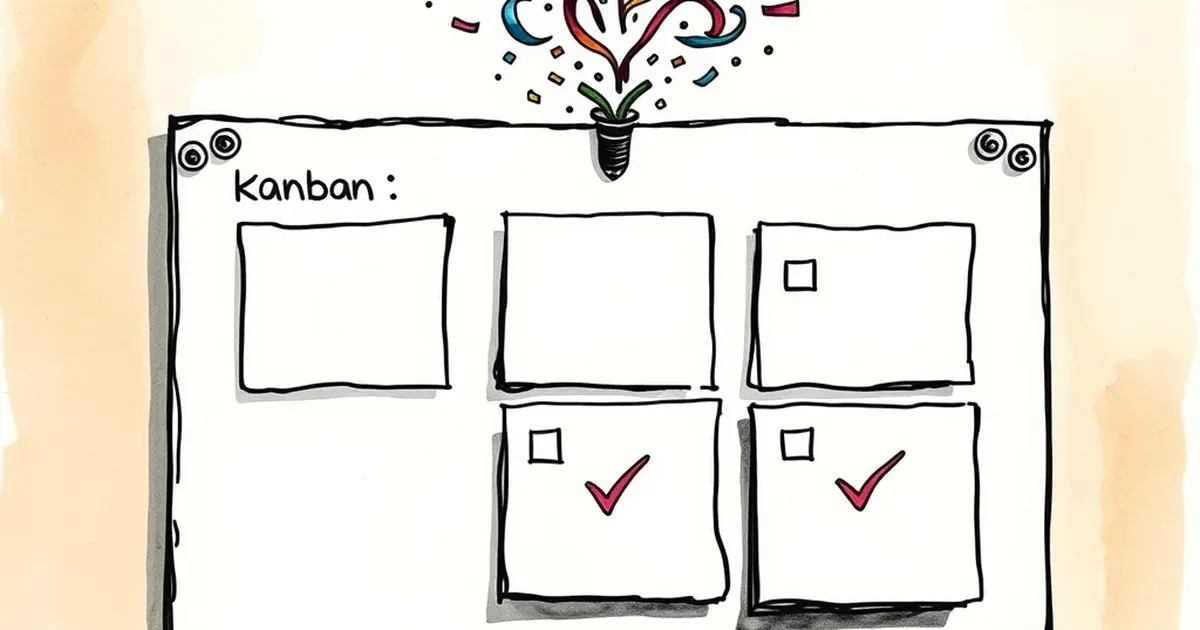
Your onboarding flow has a confetti burst. It fires when someone finishes the second task in your setup wizard. It looks great in the demo. It also fires for roughly half the people who never finished the first task — because the first task is optional, and 48% of new users skip it.
Is that celebration working for you, or against you? That's the question worth sitting with, because the answer sits at the intersection of interface design and behavioral psychology, and most teams never ask it.
The Feedback Loop You Didn't Design on Purpose
Confetti is a reward. Rewards shape behavior. That's the whole premise of variable-ratio reinforcement — the pattern B.F. Skinner documented where unpredictable rewards produce the most persistent behavior. He found it in pigeons pecking for food pellets; product teams find it in notification badges and streak counters.
But here's the part that gets lost: a reward teaches whatever happened right before it. If your confetti fires after task two, and 48% of users skipped task one, you are systematically teaching half your audience that skipping is fine. You didn't decide that. The loop decided it for you.
Loss Aversion Cuts Both Ways in a Setup Wizard
Kahneman and Tversky's loss aversion work tells us people weigh losses roughly twice as heavily as equivalent gains. Designers usually apply this to pricing pages. It applies just as hard to onboarding.
When you mark a task "optional" and put it first, you're framing it as something that can be lost without cost. The user reads the label, not your intent. They skip. Then the confetti reassures them they did the right thing. You've now spent your one reward moment reinforcing a behavior you'd rather not see.
The fix isn't to remove the celebration. It's to put the reward where the decision is. Celebrate the choice to skip or complete — but make the skip explicit, not silent. "You can add this later" is a very different signal than a task that just sits there looking skippable.
A Concrete Example: The Progress Bar That Lied
A team I talked to had a three-step setup: connect an account (required), invite a teammate (optional), and pick a template (optional). Their progress bar filled to 33% after step one and 100% after step three. Users who skipped step two saw the bar jump from 33% to 100% and assumed something was broken — support tickets spiked with "my setup didn't save."
The underlying problem wasn't the bar. It was that the interface communicated a rule the product didn't actually follow. Behavioral research on decision-making under uncertainty is consistent on this: people build mental models fast, and they react badly when the model fails. A progress bar is a promise. Break it and you lose trust that's expensive to rebuild.
Where the Reward Should Actually Live
The practical move is to move the reward to the moment of commitment, not the moment of completion. Confetti after a required first step tells the user "you're in." Confetti after an optional third step tells them "you're done" — even if they aren't.
Ask three questions about any celebration in your flow:
- What behavior does this reward? Trace it back to the action immediately before it fires.
- Who sees it, and who doesn't? If 48% of users reach the reward without doing the thing you care about, the reward is misaligned.
- What does the interface promise? Progress indicators, checkmarks, and confetti are all contracts. Make sure they match what the product actually requires.
What to Build Next
Go look at your setup flow and find the celebration. Then find the gap between who reaches it and who does the work you actually wanted. If those two groups don't match, you have a design decision hiding in a visual flourish — and it's worth making deliberately rather than letting the animation make it for you.
The next version of your onboarding won't be judged by how good the confetti looks. It'll be judged by whether it fires for the right reason.
— creative mess