Chips Clatter Longer Than the Payout Notification Holds
The gap between casino chip clatter and fleeting payout alerts reveals how physical gameplay outlasts digital notifications
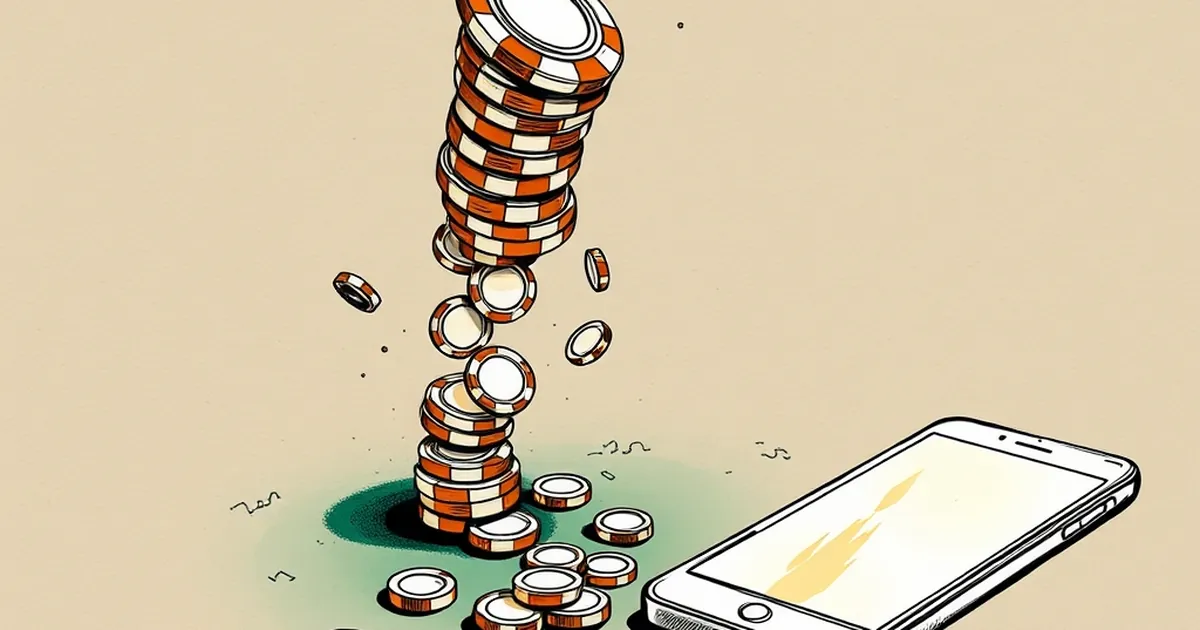
The payout notification pings your phone, you glance at it, and by the time you’ve swiped it open, the dealer has already slid another card out of the shoe. That’s the gap this piece is about: the physical clatter of chips on a felt table or the spin of a digital reel lasts visibly longer than the average push notification stays on your screen. In live casino streams, the interval between a round’s conclusion and the next bet window is typically 12 to 18 seconds, while a standard Android or iOS notification banner vanishes after about 5 to 8 seconds if untouched.
The Sound of Money vs. The Sound of Silence
There’s a reason casinos put physical chips on a table instead of just keeping a digital tally. The tactile feedback—the weighted click, the slight give of the felt—extends the moment of resolution. That clatter is a designed pause, a beat for your brain to register a win or a loss before the next hand starts. The payout notification, by contrast, is a system event. It’s built to be ephemeral, a background process that interrupts you just long enough to confirm a transaction, then disappears.
That mismatch matters when you’re playing fast games like Lightning Roulette or Speed Baccarat. The game’s visual and audio loop is engineered to keep you in a rhythm. The notification is an external hiccup in that rhythm, and if you’re not looking at your phone at the exact moment it arrives, you’ve missed the only tangible confirmation of the result.
Why 12 Seconds Feels Like an Eternity
Let’s anchor this with a number: 14 seconds. That’s the average wait time between the final card being dealt and the “Place Your Bets” overlay reappearing on Evolution Gaming’s standard blackjack tables. In those 14 seconds, the dealer sweeps the cards, pays out the winners, and collects the losers. The physical action of pushing a stack of 50€ chips toward a winner takes about three seconds of that time. The rest is just… waiting for the software to catch up.
Now, a push notification from a sportsbook or casino app stays in your notification shade indefinitely if you don’t swipe it. But the banner at the top of your screen? That’s gone in under 8 seconds. So the game itself is still finishing its physical routine—chips moving, cards being turned—after the notification that supposedly tells you the result has already faded.
The Real-Time Disconnect
This isn’t a problem if you’re betting in-play on football, where the delay between a goal and the odds update is a known, accepted lag. But for table games, the notification is a lie of sorts. It says “here’s your result,” but the game is still mid-routine. If you act on that notification—say, you see a big win and immediately try to cash out—you’re acting on a snapshot that’s already stale. The game hasn’t even moved to the next round yet.
Some operators have tried to sync this by delaying notifications until the next hand starts. That’s worse, because now you get a payout alert for a hand you’ve already forgotten, while the current hand is already in progress. The clatter and the ping are fundamentally out of phase.
The Open Question
As live dealer games get faster—some studios are testing 20-second rounds for Dragon Tiger—the gap between the physical game and the digital notification will only widen. The question isn’t whether operators can sync them better. It’s whether we, as players, should even care about the notification at all. If the chips are still clattering, the result isn’t final. Maybe the smarter play is to ignore the phone entirely and just watch the table. But then why did you turn on notifications in the first place?
— creative mess