Bonus Wheel Lands 1 Segment Past the Segment You Watched
That bonus wheel jump past your segment is a real visual effect with a less sinister explanation than it looks, though not entirely innocent
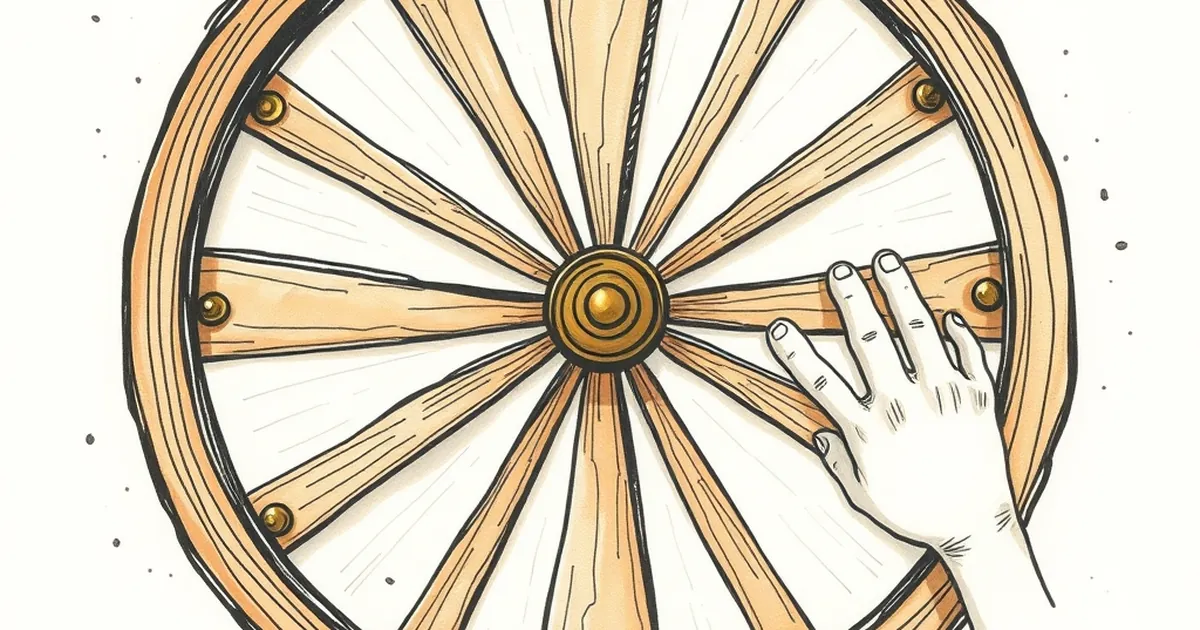
Every so often a clip goes around showing a bonus wheel easing to a stop and then snapping forward, past the segment you'd swear was under the pointer. The claim underneath it is always the same: the wheel jumped a segment, so the game is rigged. It's a real visual effect worth explaining, and the explanation is less sinister than it looks — but not entirely innocent either.
Here's what's actually happening. A wheel animation is a piece of theatre played on top of a result that was already decided. The RNG draws the outcome first, then the presentation layer is handed a target and told to make it look plausible. The pointer doesn't measure anything. It's a sprite drawn at a fixed angle while the wheel image spins behind it, and the two are reconciled by a tween — an interpolation curve that eases the wheel to a stop. When the easing curve and the frame rate disagree, you get exactly the artefact in the clip: a visible overshoot, then a correction.
Where the extra segment comes from
Three things cause it, and they're boring in the way most rigging claims turn out to be.
Frame timing. Most mobile browsers render at 60Hz, but a device under load can drop to 30 or throttle unpredictably. If the animation is time-based rather than frame-based, the final position is calculated from a timestamp. If the tab loses focus mid-spin — a notification, a call, a switch to another app — the timestamp drifts and the wheel lands somewhere the maths didn't intend. Then the engine re-syncs.
Easing overshoot. A common easing curve, easeOutBack, deliberately overshoots its target before settling. Designers use it because it feels snappy. On a wheel with 12 segments, a 5% overshoot is roughly 21 degrees — most of a segment. You watch it go past, then come back.
Cosmetic rounding. Some implementations snap the final frame to the nearest segment boundary for a cleaner look. If the target sits near an edge, the snap can read as a jump.
Why the result doesn't depend on the animation
The outcome comes from the RNG, and the wheel is a renderer. A studio that wanted to fake a spin would have no reason to do it this visibly — the whole point of the animation is to make the process look transparent. The overshoot is a bug in the presentation, not evidence of tampering.
That said, "it's just a rendering glitch" isn't a free pass. If the wheel visually lands on one prize and the game credits another, that's a dispute about what you were shown, and it's fair to raise it. Screenshot the final frame and the credited result together and send both. Regulators in most licensed markets require the displayed outcome to match the paid outcome, and studios do patch these.
What to check before you believe the clip
Clips are short and edited. Watch for the cut: many viral "wheel jump" videos splice two spins together, or the recorder crops out the moment the wheel resettles. A genuine artefact leaves a trail — the wheel stutters, the easing visibly fights itself, and the credited prize matches the segment it finally rests on.
Ask one question of any clip: did the payout match where the wheel stopped? If yes, you're looking at a cosmetic bug. If no, you're looking at something worth reporting.
The bit nobody tests
Here's the uncomfortable part. Animation fidelity is rarely in the test suite. Studios test RNG distribution — you'll see certification reports citing millions of simulated spins and RTP figures to one decimal, like 96.4% over 10 million rounds — but they don't test whether the tween looks right on a throttled Android device at 28 frames per second. So the glitch survives, gets clipped, and becomes a rigging video.
Which raises the question worth asking of any studio shipping a bonus wheel: if the animation is purely decorative, why does it have an easing curve capable of overshooting the result it's supposed to be illustrating? Nobody's answered that one yet.
— creative mess