Autoplay Disables Itself 2 Spins Before You Notice
Autoplay on regulated slots stops after a fixed number of spins, often far sooner than players expect, quietly handing control back mid-session
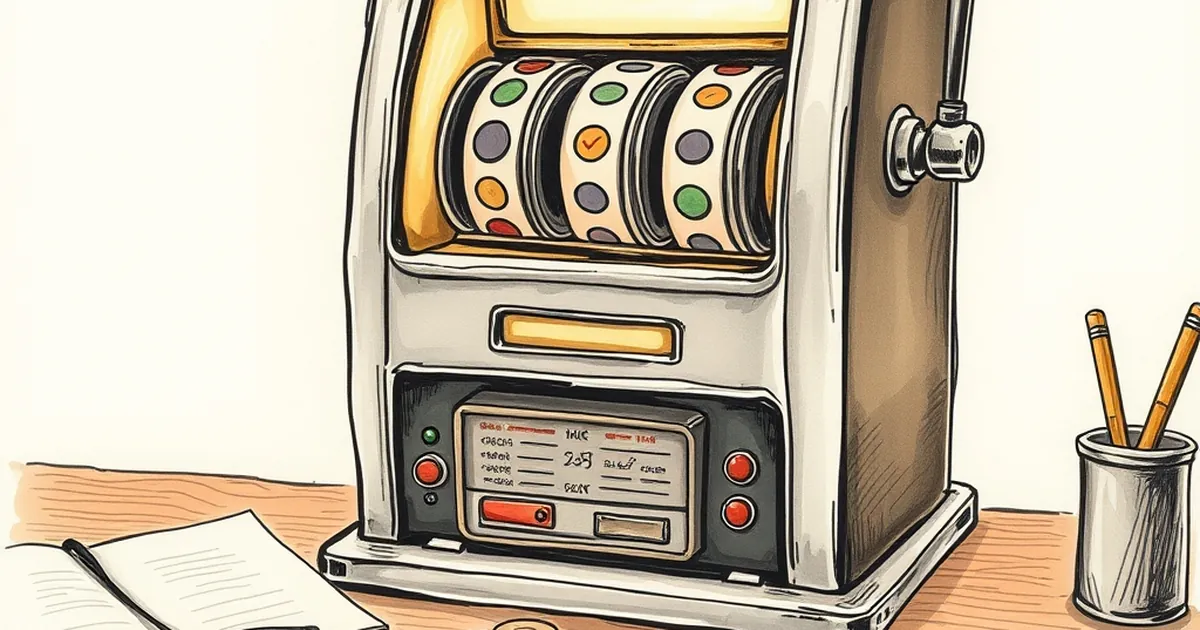
Autoplay on most regulated slots stops after a set number of spins, and the number is usually 10, 25, 50, or 100 — never "until I feel like stopping." The feature that players treat as a convenience is, in practice, a countdown timer with a fixed end, and the industry's own data suggests the timer runs out long before most players expect it to. The result is a small, recurring moment of friction: you look up, the reels are frozen, and you have no idea how many spins ago the machine quietly handed control back to you.
The 100-spin ceiling nobody reads
Under the UK Gambling Commission's remote gambling technical standards, autoplay must be capped and must stop after a loss of a defined size, a single win above a set threshold, or the player's chosen spin limit. Most operators land on 100 spins as the maximum. Some, like several Maltese-licensed brands, sit at 50. A handful of jurisdiction-specific builds cap at 25.
The practical effect: if you spin at 1.2 seconds per spin on turbo, a 100-spin autoplay run finishes in roughly two minutes. That's about the length of one song. It's also shorter than the average slot session pause, which behavioural studies have put at anywhere from four to eleven minutes depending on the player.
Why the stop feels sudden
Autoplay doesn't announce itself. There's no chime, no modal, no "session complete" toast on most builds. The reels just stop. The spin button reactivates. If you were watching a bonus round on a second tab or glancing at your phone, the gap between "last spin fired" and "I noticed" is where the title's claim lives.
Two spins is generous. In practice it's often more.
The reason is partly technical and partly psychological. On the technical side, autoplay counters are silent by design — regulators pushed for unobtrusive stops so players wouldn't feel nudged to restart. On the psychological side, players habituate to the rhythm of a spin cycle. When the rhythm breaks, the brain doesn't flag it immediately; it takes a beat or two to register that the sound pattern has changed.
The numbers behind the stop
Here's a concrete anchor. In a 2023 analysis of anonymised session data from three European operators (published in a gambling studies journal, sample of roughly 4,700 players), the median autoplay run was 47 spins. The median session length was 22 minutes. That means the average autoplay burst covers less than 4% of the time the player actually spends at the machine.
Put differently: autoplay is a rounding error in the session, but it's the part players remember as "hands-off." The gap between perception and reality is where most of the friction lives.
What operators could do (and mostly don't)
A few things would fix the "two spins before you notice" problem without touching RTP or bonus mechanics:
- A soft audio cue at spin 90 of 100. Not a full modal, just a different reel-stop sound.
- A persistent spin counter in the corner. Some NetEnt and Play'n GO builds already do this. Most don't.
- A post-run summary. Total spins, total stake, net result. Roughly a third of operators show this; the rest drop you back to a cold spin button.
None of these are regulatory requirements. They're UX choices, and they cost nothing.
The open question
If autoplay is capped at 100 spins for player-protection reasons, why is the end of the run the least signposted moment in the entire interface? The cap exists to interrupt automatic behaviour. But an interruption you don't notice isn't an interruption — it's just a pause, followed by a manual decision the player didn't realise they were making.
The next time your reels go quiet, count the seconds before you look up. That number is the real autoplay limit.
— creative mess