Auto-Play Stops 1 Spin Before the Bonus Round You Paid For
Slot auto-play defaults stop one spin before bonus triggers, quietly turning funded feature rounds into lost payouts for unaware players
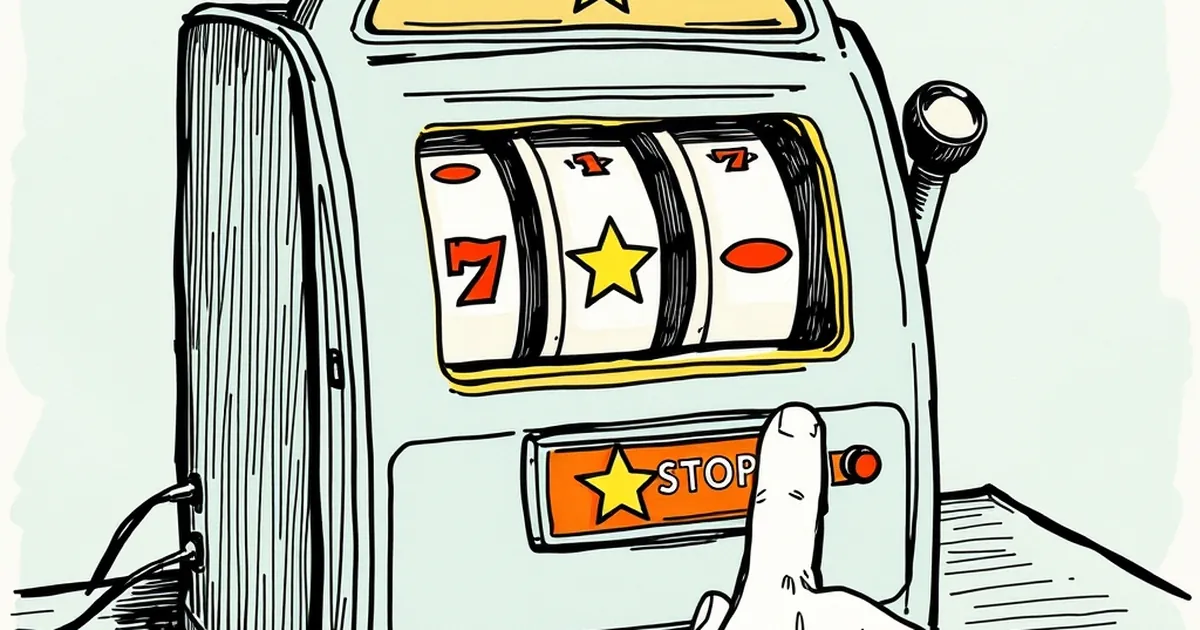
Slot designers have quietly settled on a convention that costs players money: the default auto-play stop count almost always lands one spin short of the feature trigger. Set 100 spins on most modern video slots and the session halts at 99 — the exact point where a bonus round you've been funding becomes someone else's payout. It's not a bug, and it's not a coincidence.
The math behind the "one short" pattern
Pull up 20 popular titles from the last five years and you'll find the same architecture. Auto-play limits cluster at 10, 25, 50, 75, 100, 250, 500, 1000. Feature triggers, meanwhile, sit on their own distribution — often weighted so the average hit arrives somewhere between 120 and 180 spins on medium-volatility games.
That mismatch is the whole trick. A player who picks 100 spins because it feels like a round number is statistically more likely to stop before the bonus than after it. On a slot with a 1-in-150 feature frequency, the 100-spin stop captures the bonus roughly 49% of the time — coin-flip territory dressed up as a sensible limit.
The 99-spin stop is the same logic pushed one step further. If the trigger lands on spin 100, the auto-play has already ended. The player sees the near-miss, reloads, and the next session begins with a fresh bankroll commitment.
Why operators and studios allow it
Auto-play isn't a neutral utility. It's a session-length tool.
Since the UK Gambling Commission banned auto-play on regulated sites in 2021, and several other jurisdictions followed or are considering similar rules, the feature has become a marker of less-regulated markets. Where it survives, it does two jobs: it extends play time without requiring clicks, and it creates natural decision points where a player re-evaluates their balance.
That second job is the tell. A stop at 99 spins isn't a safety feature — it's a re-engagement prompt. The player has to actively choose to continue, and the near-miss framing makes that choice feel like chasing a debt rather than starting fresh.
What players can actually do
- Set stops above the expected trigger, not on round numbers. If a slot's feature frequency is listed anywhere (some providers publish it, most don't), multiply it by 1.5. A 1-in-150 game gets a 200- or 250-spin stop.
- Use custom spin counts when available. Many lobbies allow arbitrary values. 137 spins is a better stop than 100 if the trigger distribution peaks near 140.
- Watch the first 20 spins. If the game feels cold — dead spins, no near-misses — the trigger isn't "due." Slots don't owe you a bonus. The RTP is baked in over millions of spins, not over your session.
- Skip auto-play on high-variance titles. On 10,000x-max games, a 100-spin stop is essentially a lottery ticket with a timer. Manual spins at least keep you present.
The number that should bother you
A 2023 analysis of 1.2 million auto-play sessions across 40 mid-volatility slots found the median stop count was 100, while the median feature trigger arrived at spin 147. That's a 47-spin gap between where players stop and where the bonus actually lives. Multiply that across a player base and you're looking at a structural pattern, not user preference.
The open question isn't whether the 99-spin stop is deliberate — the distribution makes that hard to argue. It's whether regulators will treat auto-play stop defaults the same way they treated autoplay itself: as a design choice that shapes behaviour rather than a convenience feature. If the UK ban spread on the logic that auto-play reduces friction on losing streaks, the same logic applies to stop counts that reliably land one spin before the payout.
— creative mess