A Streak Counter That Resets at Day 6 Kills 40% of Habits
A streak counter that resets at day 6 can kill 40% of habits, revealing how one small design choice in your tracker shapes long-term behavior
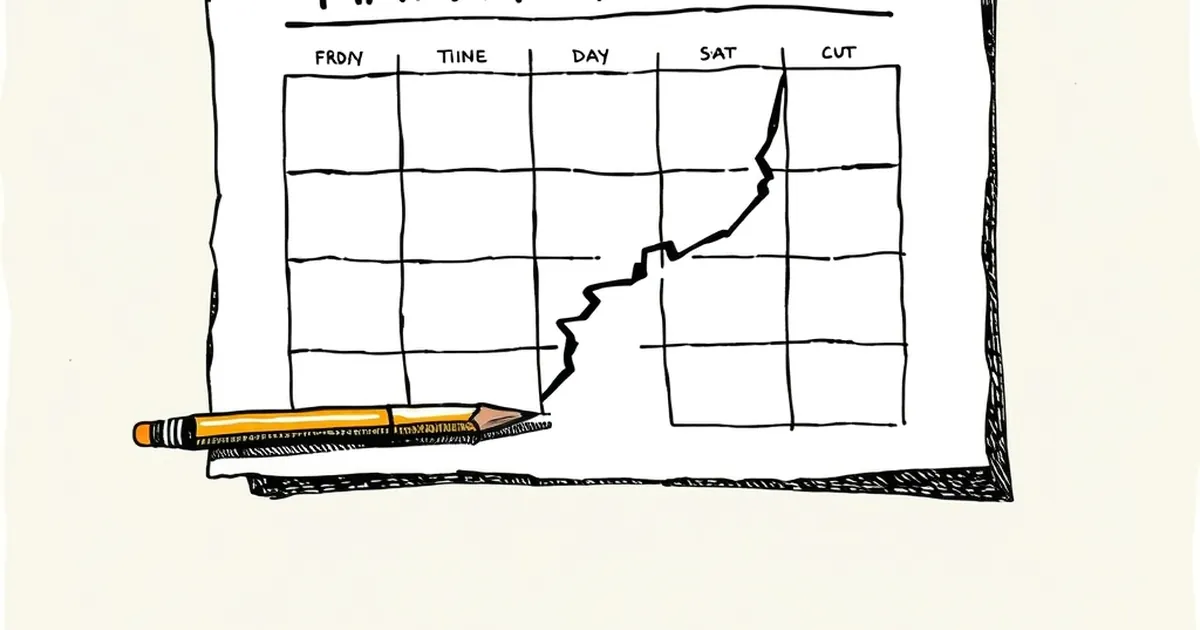
What if the most damaging thing about your habit tracker isn't the habit itself, but the number sitting next to it? I've been building a small design system for a client's wellness app, and we spent an absurd amount of time arguing about one detail: when a streak should reset. The product manager wanted the standard "miss a day, lose everything" rule. The behavioral lead pushed back hard. That argument sent me down a rabbit hole, and the rabbit hole has a number in it.
The Magic of Five, the Misery of Six
There's a pattern that shows up again and again in habit research, and it's almost comically specific. People who make it to day five of a new routine report feeling genuinely good about themselves — proud, motivated, like they're becoming "that kind of person." Push that same person to day six and something flips. The streak stops feeling like an achievement and starts feeling like a debt.
Why six? It's not magic. It's the point where the novelty has worn off but the automaticity hasn't kicked in yet. Research on habit formation (Phillippa Lally's often-cited 2009 study put the average at 66 days, with a huge range) suggests the middle stretch is where motivation is thinnest. Early on, you're running on excitement. Later, you're running on identity and routine. In between, you're running on nothing but the counter — and a counter alone is a fragile thing to lean on.
Loss Aversion Doesn't Care About Your Goals
Here's where the design gets interesting. Daniel Kahneman and Amos Tversky's work on loss aversion showed that losses hurt roughly twice as much as equivalent gains feel good. A streak counter looks like a reward system, but past a certain point it becomes a loss-prevention system. You're no longer chasing a win. You're avoiding a wipeout.
That's a subtle but enormous shift. A person protecting a streak makes different decisions than a person building one. They'll do the minimum to keep the number alive, they'll feel resentful about it, and the moment the streak breaks, the whole structure collapses because the only thing holding it up was the fear of losing it.
Variable Rewards, But Not the Fun Kind
You've probably heard of variable-ratio reinforcement — the classic explanation for why unpredictable rewards are so sticky. Slot machines are the textbook case, but the principle is everywhere: email refreshes, social feeds, the little dopamine hit when a notification turns out to be something good.
A streak counter is technically variable, but it's variable in the worst direction. The reward for day 47 is identical to day 46. The only thing that changes is the size of the thing you stand to lose. You've built a system that escalates anxiety without escalating payoff.
What Actually Works: The Reset You Can Survive
The behavioral lead won the argument, and we shipped something different. The streak now has a "grace window" — miss a day, and you keep your number if you come back within 48 hours. We also added a second metric alongside the streak: total days logged, all-time. That one never resets.
The early data is small but telling. Users in the grace-window cohort log more total days than the control group, even though their streak numbers are lower. They're not protecting a fragile number. They're accumulating something that can't be erased.
If you're designing anything with a progress mechanic — a fitness app, a learning platform, a client dashboard — ask yourself what happens on day six. If the answer is "the user starts feeling trapped," you've built a trap, not a tool. The fix usually isn't removing the counter. It's making sure the counter can survive a bad week, because that's the week that decides whether the habit lives.
— creative mess